A Guide to Biosolar Roofs: A Green Energy Solution
BauderTALKS, Industry best practice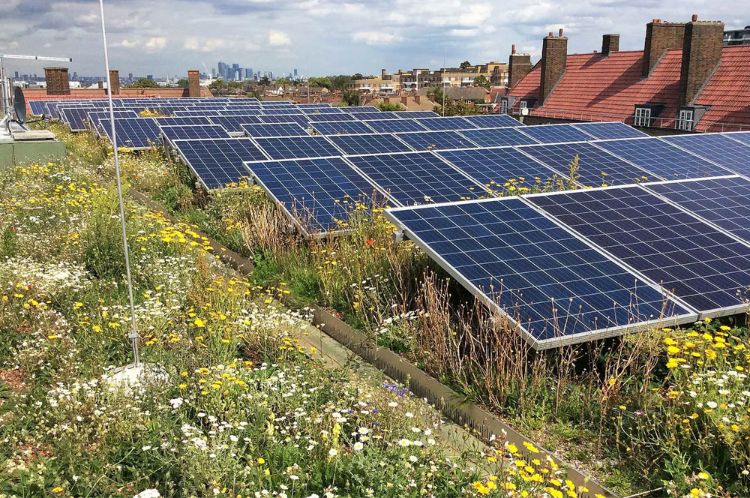
A biosolar roof combines two sustainable technologies: green roofing and solar photovoltaic (PV) panels. Instead of placing solar panels on a bare roof, this system installs them above a fully integrated green roof. Both elements work together in a symbiotic relationship, each enhancing the performance of the other.
Vegetation can cover 100 percent of the roof area (minus gravel margins), and the PV panels are raised above the growing medium, creating space for vegetation to grow and thrive across the entire roof. This approach contributes to biodiversity and energy efficiency within the same footprint.
PV and green roofs: How they work together
The success of a biosolar system comes from the mutual benefits each technology provides to the other, such as the following:
- Enhances biodiversity
The raised solar panels create areas with different levels of sunlight and shelter. This variety in conditions allows a wider range of plants and invertebrates to establish, boosting biodiversity across the roof.
- Improves solar PV efficiency
Green roofs help maintain lower rooftop temperatures, especially in warmer months. This improves the average energy output of PV panels by approximately 6% compared to those installed on a conventional roof (Green Roof & Solar Array – Comparative Research Project; University of Technology Sydney, July 2021).
- Provides protection for the roof structure
The green roof acts as a ballast, removing the need for PV mechanical fixings that could compromise the waterproofing. This lowers the risk of leaks, extends the roof’s lifespan, and avoids problems with potential faulty mountings, which are difficult to repair on a green roof.
- Maximises green coverage
Unlike conventional PV installations that leave areas of the roof unused, this system allows vegetation to grow beneath and around the panels. As a result, the entire roof qualifies as a biodiverse green roof.
Key considerations for a successful biosolar roof
To ensure long-term performance of a biosolar roof, consider the following:
- Use a high-quality waterproofing and insulation system that can support both vegetation and solar panels. The guarantee should be at least the same duration as the installed PV array.
- Select a single-source solution to reduce compatibility issues and benefit from a comprehensive warranty.
- Choose a non-penetrative mounting system to protect the waterproofing layer.
- Ensure the mounting system enables simple maintenance of both vegetation and solar PV system.
- Both the green roof and PV array add weight, especially when saturated with water. Bauder calculates the depth of substrate required to prevent “wind uplift” of the solar array, and the building structural capacity should be confirmed with a structural engineer.
Why Choose BauderSOLAR G LIGHT?
The BauderSOLAR G LIGHT biosolar system offers several key advantages:
- Time-efficient installation since no additional PV ballasting is required
- Compliance with the Green Roof Organisation (GRO) Biosolar Best Practice Design Guide
- Backed by a single-responsibility guarantee (excludes PV panels)
- Compatible with blue roof technology for additional stormwater attenuation benefits
Conclusion
Biosolar roofs provide a unique opportunity to combine energy generation with enhanced biodiversity. This integrated solution makes the most of the available rooftop area while safeguarding the roof structure for both longevity and performance.
For architects, developers, and building owners looking to future-proof their projects, the BauderSOLAR G LIGHT system delivers both environmental and practical value.

Want to find out more?
For further information on how our Bauder ECO FF product can help reduce the embodied carbon of your roofing scheme, please contact us.